
This is the time for India to plan forward fully, with the goal of Atmanirbharata, and energy security. The Persian Gulf is no longer a reliable source, points out Rajeev Srinivasan.

Pakistan's Foreign Minister Ishaq Dar met with his counterparts from Egypt and Turkiye in Islamabad ahead of a quadrilateral summit, including Saudi Arabia, to discuss the ongoing conflict in West Asia and explore avenues for peace.

The ministry of petroleum and natural gas on Friday reiterated that India has sufficient stock of crude oil, petrol and diesel, while ensuring an uninterrupted supply of LNG and LPG despite disruptions caused by the ongoing West Asia conflict.

The Indian rupee depreciated by 34 paise to close at 93.78 against the US dollar, marking its third consecutive session of decline. This fall is attributed to escalating crude oil prices driven by uncertainty surrounding US-Iran peace talks and fresh attacks in the Strait of Hormuz, alongside significant foreign institutional investor outflows from domestic equity markets.

Iran has placed anti-personnel and anti-armour mines around the island, where US troops could potentially stage an amphibious landing.

India has significantly reduced Aviation Turbine Fuel (ATF) prices for international airlines by 27% due to easing global fuel benchmarks, while simultaneously increasing commercial LPG and 5-kg cylinder prices to record highs.

Indian refiners are negotiating for additional crude cargoes from the US, Russia, and West Africa to ensure adequate supplies amid Middle East tensions. Refineries are maintaining normal processing rates and deferring maintenance to build reserves. The move comes as conflict impacts tanker movements through the Strait of Hormuz, a key energy transit route.

In view of the disruptive situations, the Central government has also announced a financial relief package of Rs 497 crores aimed at helping exporters affected by disruptions in West Asia.

Trump may strike. He may announce productive talks and extend again. He may do both at the same time. Iran will not open the Strait on someone else's terms, so no matter what happens, that problem will remain unsolved. And the IRGC will still be collecting its $2 million toll from every ship bold enough to ask permission to pass.

Specifically, military experts are assessing if the 'Octopus' interceptor anti-drone system, produced in the UK to support Ukraine in countering Russian threats, could be repurposed to strengthen British protections against Iran's Shahed drones.

A US-sanctioned tanker carrying Iranian crude oil is heading to India, marking the resumption of oil imports from Iran after seven years.

India's fertiliser subsidy bill is projected to increase by approximately 70,000 crore, reaching around 2.41 trillion in FY27, primarily due to rising import costs exacerbated by the ongoing West Asia crisis.

Markets face risk of a prolonged bear phase as oil shocks and geopolitical tensions test inflation, growth and investor confidence globally, points out Debashis Basu.

The Iranian Foreign Ministry has stated that Tehran currently has no plans for a subsequent round of negotiations with the United States, according to the state media Tasnim news agency. This announcement comes as international mediators had hoped for a follow-up to the Islamabad talks before the looming ceasefire deadline.
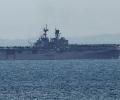
Although extensive air attacks have been carried out to destroy most of Iran's defence capabilities, the latter's resilience and sustenance during the war clearly indicate that the US landing force would encounter severe resistance in the operation, explains Commodore Venugopal Vengalil (retd).

The Sri Lankan government attributes the sharp depreciation of the rupee against the US dollar to the ongoing conflict in West Asia, citing increased costs for essential imports like gas, fertiliser, and oil.

Iran blames the US for 'maximalism' and 'shifting goalposts' leading to the collapse of the Islamabad talks.

United States President Donald Trump on Friday signalled the US intention of going all out in its campaign against Iran's Islamic regime, warning Iran to watch out for what would happen today and saying that the US was winning the conflict despite what reports claimed.

US Secretary of State Marco Rubio has said that the US is ready to sell as much energy as India is willing to buy. He described India as a 'great partner' ahead of his visit to New Delhi.

The United States has announced new sanctions targeting Iran's 'shadow oil economy,' accusing Tehran of using illicit oil revenues to fund the Islamic Revolutionary Guard Corps (IRGC) and its regional activities.

The Reserve Bank of India (RBI) and the central government have introduced a package of measures, including tax exemptions for FPIs on government securities and a concessional foreign-exchange swap facility, aiming to attract up to $50 billion in foreign capital. This initiative is designed to strengthen India's balance of payments and potentially cover the projected BoP gap for FY27.

Indian equity markets experienced a significant decline in early trade, with the BSE Sensex and NSE Nifty dropping, as escalating geopolitical tensions in West Asia and a surge in global oil prices dampened investor sentiment. Track Sensex, Nifty50 movement and key market drivers for May 8, 2026.

Top commanders of the Indian Navy will discuss the implications of the West Asia crisis on India's energy security and review operational readiness at a three-day conference.

The Natanz nuclear facility is one of Iran's key nuclear installations and has previously been at the centre of international concerns over Tehran's nuclear programme.

Asian Development Bank (ADB) on Friday warned that India's limited crude oil reserves of about 100 million barrels - sufficient for only 40-45 days of consumption - leave the country particularly vulnerable to supply disruptions through the Strait of Hormuz amid the ongoing war in West Asia.

Analysts predict that the ongoing conflict in West Asia, crude oil price fluctuations, and the US Federal Reserve's interest rate decision will significantly influence the Indian equity market this week.

US President Donald Trump and Israeli Prime Minister Benjamin Netanyahu had a tense phone call over the future course of the war on Iran, with Washington favouring a deal instead of resuming strikes, according to US media reports.

'What we have yet to see on either the US or the Iranian side is willingness to compromise on their ultimate demands and the flexibility to reach an agreement to end the war.

Tensions in West Asia have dramatically escalated as Israel launched targeted military operations against Iran, triggering widespread blasts across strategic cities, following earlier Iranian projectile attacks on Israel.

Moody's Ratings has downgraded India's growth forecast for financial year 2026-27 (FY27) to 6 per cent from 6.8 per cent, attributing the revision to weaker consumption and industrial activity, elevated energy prices, and rising input costs stemming from the West Asia conflict.
The International Energy Agency (IEA) has proposed immediate demand-side measures, including remote work, lower speed limits, and reduced air travel, to mitigate the impact of a global oil supply shock caused by Middle East disruptions.

Trump seems to have estimated that Ghalibaf is a pragmatic politician who is receptive to close relations with the US and is enthusiastic about fostering business and economic ties in particular, points out Ambassador M K Bhadrakumar.

There are enough people at the top decision-making level in Tehran who are still willing to negotiate, provided Trump can create the right setting for the negotiation to acquire a dynamic of its own, points out Ambassador M K Bhadrakumar.

The Iranian military has asserted that its forces successfully targeted and downed a US A-10 aircraft, according to a report by Al Jazeera.

The United States, which entered this war in expectation of a short, sharp win along the Venezuela model, is now preparing for deeper involvement in a conflict it does not fully control, without the allies it typically relies on, against an adversary that is not behaving as expected, in a global environment that is already absorbing economic shock. Prem Panicker continues his must read daily blog on the Gulf War.

'The flip side of this is that he won't hesitate to call out India if he thinks its policies are hurting US economic interests or border US foreign policy goals.'

By all available indications, the White House drafted a face-saving note and handed it, ready-made, to Islamabad. Pakistani Prime Minister Shehbaz Sharif was supposed to then post it in the guise of a plea urging Trump to extend the deadline by two weeks 'to allow diplomacy to run its course'. Trump would then graciously accept Pakistan's 'request' and declare a ceasefire. Sharif dutifully posted the message on X. Except that he, or whoever was handling the account, forgot to delete the tell-tale first line visible in the edit history: 'Draft - Pakistan's PM Message on X'. Prem Panicker's must read blog on the Iran War.

The Congress party has criticised Prime Minister Narendra Modi's diplomatic efforts following the ceasefire agreement between the US and Iran, facilitated in part by Pakistan. The party claims this development undermines Modi's strategy and exposes his perceived failures in foreign policy.

Qatar has halted liquefied natural gas (LNG) production after its facilities came under attack amid the ongoing West Asia conflict, disrupting supplies to India and squeezing feedstock availability for key domestic sectors.
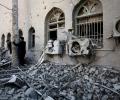
The logic of war plus the gathering storms in US politics as the midterms loom large leave him with no real alternative but to negotiate, points out Ambassador M K Bhadrakumar.
